Pushing the horizon: Urban farming and community-led innovation in Mukuru informal settlement
A small community-run greenhouse in Mukuru is offering insights into how controlled-environment agriculture can strengthen food security in urban environments under increasing pressure—and a look into the future of food systems in informal settlements.
by Christian Sonntag, Emmanuel Atamba, Lumi Youm
Published on Feb 09, 2026
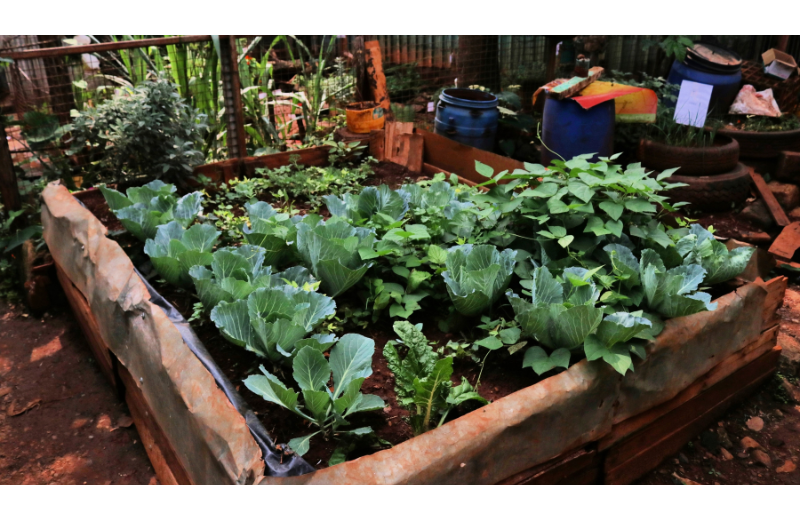
In the heart of Mukuru informal settlement in Nairobi, a small greenhouse stands in the midst of narrow streets and the everyday rhythms of community life. Inside this structure of steel and plastic, vegetables and fruits grow through innovative controlled-environment agriculture (CEA) approaches such as hydroponics.
For the people who cultivate it, and those who benefit from its harvests, this greenhouse represents more than food. It is a living example of how research and innovation, combined with strong community leadership, can drive urban food systems that are more sustainable and resilient to challenges.
This greenhouse, named the Mukuru Demonstration Unit (MDU), was established by TMG Research in partnership with Miramar International Foundation and the Ruben Centre through the financial support of the Federal Ministry for Economic Cooperation and Development (BMZ) to help reimagine what sustainable food production can look like in dense urban environments. Our findings in this living laboratory where research meets action continue to demonstrate the power of urban, community-managed agriculture to strengthen resilience, skills, and local economies.
Food systems under pressure
The Mukuru informal settlement, like other informal settlements in Nairobi, has seen explosive population increase in recent years. As the population increases and settlements grow denser, local food systems are under increasing pressure. Supply chains are becoming strained and land for food production is disappearing. The impacts of climate change, including water scarcity, heat waves, flooding, and unpredictability of weather events, make producing food more challenging.
These pressures are felt even more on low-income households. For many families, continuous access to food is a big challenge. Access to safe and nutritious produce is an even bigger one. For this reason, communities have begun to increasingly engage in urban farming—families use sack or container gardens to grow fresh produce, even if it is a fraction of what they need. Noting this, the Urban Food Futures programme began to conduct action research in urban farming in Mukuru, right where such efforts are most needed. Our aim was to identify the methods and approaches most useful for food production in such a context, with a research approach that complemented community knowledge and innovation.
Building community resilience through climate-proof urban food production
Year-round, the greenhouse produces a steady supply of safe, nutritious, pesticide-free vegetables. Much of this food supports programmes at the Ruben Centre, including its school for children with disabilities, its medical clinic, and meals for staff members.
The greenhouse also produces high-value crops such as strawberries, which are used to flavour yoghurt and milk produced on-site. These community-made products demonstrate how urban agriculture can anchor circular, community-based economies in which food supports nutrition, livelihoods, and dignity. By enhancing local production at the Centre, the greenhouse helps increase self-reliance in supplying fresh vegetables.
Expanding opportunities through skills and training
The greenhouse now serves as a key center for skills development, especially for women. Since 2021, over 40 women have received training in controlled environment agriculture (CEA) and climate-resilient food production. Ten of these women have also completed further training in business development and income generation.
Using these new skills, several trainees have started their own small-scale urban agriculture projects. This has helped share knowledge beyond the greenhouse and created opportunities for income and leadership.
The Ruben Centre has made the greenhouse a part of its vocational training program in urban agriculture, certified under the Kenya Certificate of Secondary Education (KCSE) framework. This approach helps prepare a new generation of urban farmers with practical skills and formal qualifications.
Inspiring and nurturing the next generation
The MDU also serves as a learning space for children. Over 1,000 students have participated in hands-on sessions about plant growth, resource-efficient technologies, and sustainable food production.
Building on this experience, the Ruben Centre is developing a complete agriculture education program that includes environmental awareness and food literacy in its curriculum. For young people in Nairobi's informal settlements, the greenhouse offers a practical introduction to food systems and inspires them to imagine new possibilities for the future.
Action research for tomorrow’s urban food systems
As cities expand and the effects of climate change and urbanization intensify, a crucial question emerges:
How can we ensure that everyone—especially those living in informal settlements—has access to safe, nutritious, and sustainably produced food?
Through participatory action research, the MDU is generating practical evidence on how food can be grown safely in challenging urban environments. The greenhouse enables testing of methods that reduce pressure on available water, land, and nutrients while ensuring safety of the food produced.
Our findings show that even in highly constrained settings, nutritious food can still be produced sustainably. But the MDU is only one site, standing not only as a testament of what is possible, but also as a reminder of opportunity cost of inaction. With the right policy support, it is possible to replicate the success, bringing technology-based, community-run food production opportunities closer to the people who need it most. Scaling the lessons learned at the greenhouse will require increased support for research on urban agriculture in informal contexts and policies that reflect the lived realities of rapidly growing cities.
Expanding horizons, together
In Mukuru, “pushing the horizon” is more than a metaphor; it’s a daily reality. Through community collaboration, knowledge exchange, and research, the greenhouse shows that innovation thrives when communities lead, even in underserved informal settlements. By bringing research findings, new infrastructure, and hands-on opportunities directly to these communities, we ensure everyone can engage with technologies that may shape the future of food in a changing climate.
We believe these lessons are essential for the future of urban food security. With our partners and supporters, we remain committed to expanding the horizon for coming generations, especially in underserved communities, so that a sustainable future is within everyone’s reach.
- Urban Food Futures Jul 27, 2026
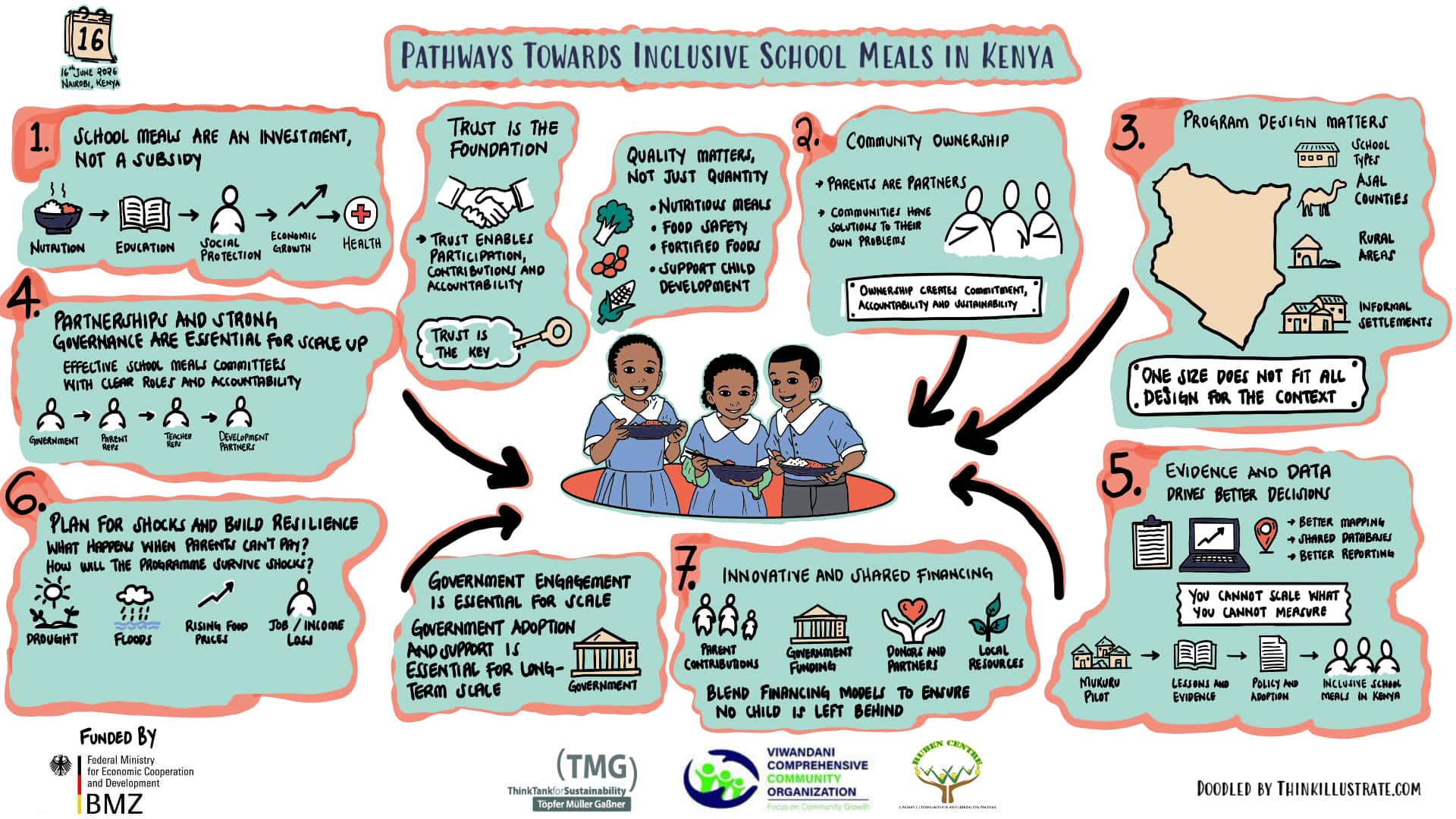
Advancing Inclusive and Sustainable School Meal Programmes
TMG Research and its partners convened a stakeholder dialogue to launch a policy brief and facilitate dialogue on the design, financing and sustainability of inclusive school meal programmes, drawing on lessons from Mukuru.
Emmanuel Atamba, Cheboi Jerono
- Land Governance Jun 24, 2026
Women don't live in silos. The Rio Convention's Gender Actions Plans should match this reality.
Frederike Klümper, Judith Rosendahl (GIZ), Venge Nyirongo (UN-Women), Dr. Birguy Lamizana (UNCCD), Jes Weigelt
- Land Governance Jun 17, 2026
Beyond Decisions, Laws, and Regulations: Why Are Pastoral Areas Still Shrinking and Farmer-Herder Conflicts Rising?
This World Day to Combat Desertification and Drought, we ask why pastoral land in Niger continues to shrink despite decades of legal protection, and what it will take for the commitments made under the UNCCD to actually hold.
Kader Baba
Written by Christian Sonntag, Emmanuel Atamba, Lumi Youm