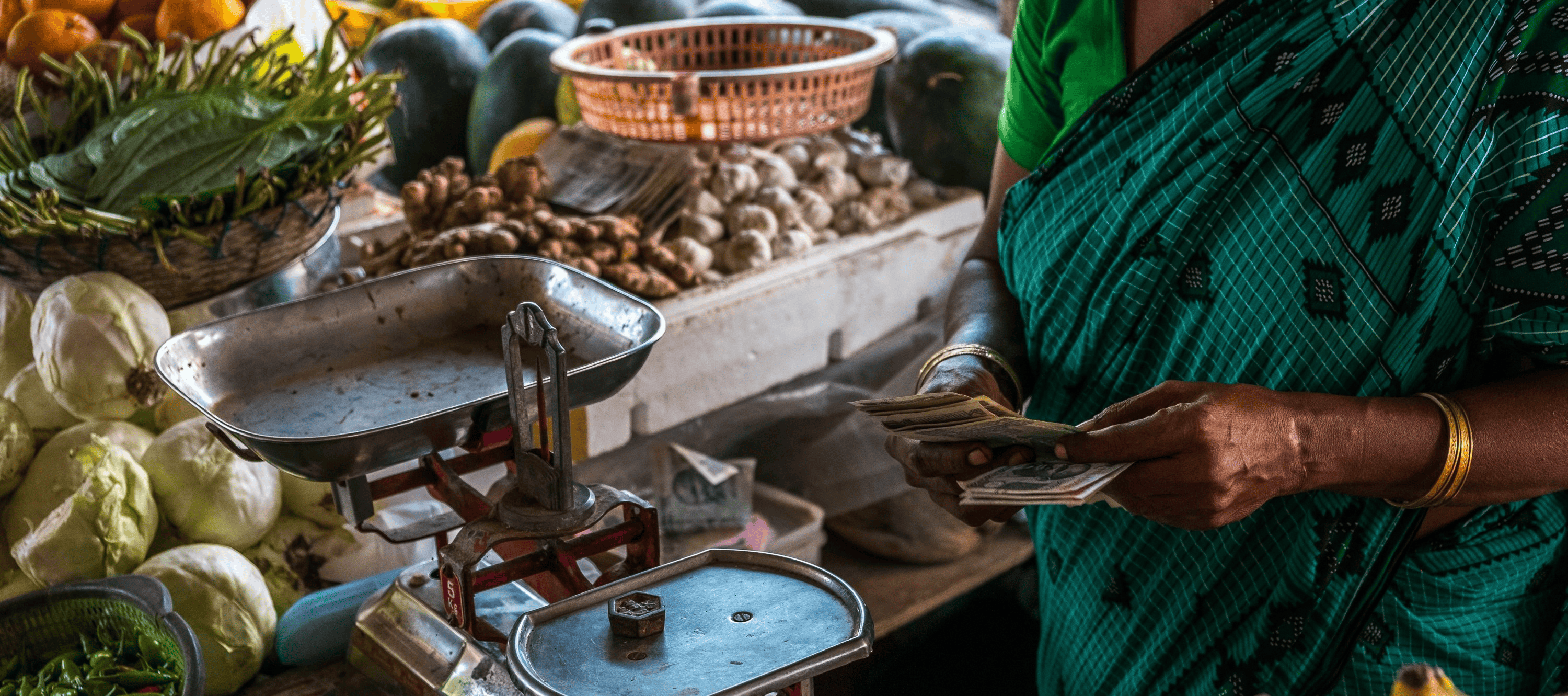
The global food system is broken—it is unsustainable, unhealthy, unjust, and in dire need of transformation. It is also enormously complex, relying on value chains and infrastructure that span the globe, using vast amounts of land, water, fuel, and other resources. Alongside providing vital nutrition and employment, global food systems therefore create many negative impacts on the environment, human health, and society. These include impacts from food production and transportation, such as greenhouse gas emissions, habitat and biodiversity loss, pollution, and poor working conditions, as well as impacts from dietary patterns, such as increased incidence of heart disease, obesity, and diabetes.
All of these impacts create costs that are not reflected in the price of food at the point of sale, but that must be paid for by society later. The UN Food and Agriculture Organization (FAO) estimates that the hidden costs of current food systems amount to USD 10 trillion per year. These costs are disproportionately borne by vulnerable groups, such as lower-income populations that are heavily affected by poor nutrition and working conditions, as well as countries in the Global South that will bear the brunt of the climate catastrophe.
Since current economic models do not account for hidden costs, businesses that operate unsustainably have an unfair advantage. Meanwhile, those that attempt to reduce negative externalities—via sustainable land management that promotes carbon storage and protects biodiversity; commitments to fair wages, decent working conditions and animal welfare; and a focus on promoting food security and crop resilience through agroecology approaches—often do so at the expense of profit. This imbalance cascades down the supply, distribution, and consumption chain, so that consumers often find themselves in food environments that encourage unhealthy, unsustainable consumption or facing food insecurity.
Systems-level change to reduce hidden costs and transform current food systems in line with the UN Sustainable Development Goals (SDGs) is therefore urgently necessary. But in order to identify the most effective levers for change, we first need a comprehensive and accurate understanding of all the positive and negative impacts of food production, transportation, and consumption.
True Cost Accounting (TCA) reveals and measures the hidden costs and benefits of food systems, so that production systems, supply chains, business models, and dietary patterns can be directly and accurately compared. But simply demonstrating which of these have fewer negative impacts is not enough; such insights must be integrated into food policy, business practices, and financial incentives to drive increased health and sustainability across all levels of the agrifood sector—from farm to factory to distributor, but also to supermarket, restaurant, and fork.
TMG uses TCA to turn insight into action, bridging research with policy and practice to accelerate the transition to more healthy and sustainable food systems. With a focus on the EU, we use a systems approach to enable holistic decision-making and identify the most effective levers for change. We partner with research institutions, governments, the private sector, and civil society actors to support transformative action across the entire food value chain.
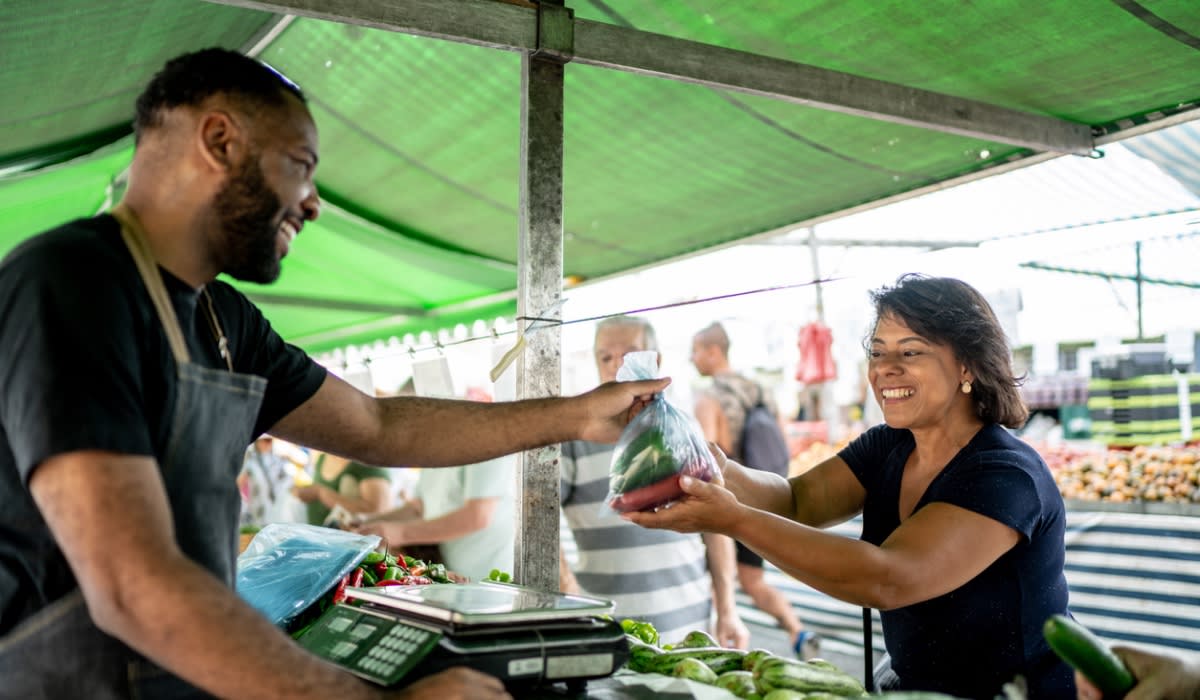
True Cost Accounting for Food Systems Transformation
Integrating TCA insights into policy and business for food systems transformation
Building on significant advances in the field—including robust TCA methodologies and increasing data availability—TMG uses its extensive experience with TCA to provide sector-specific recommendations and support policy design to effectively account for the true costs and benefits of food systems. As recognition of the transformative potential of TCA continues to grow, TMG facilities the effective integration of science-based TCA analysis into practical solutions for governance, finance and business to drive meaningful change in the agrifood sector.
Projects


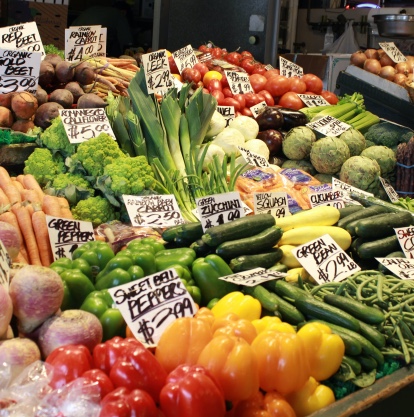

Food Systems Transformation

Exploring equitable transformation pathways for a sustainable future of food systems
The global food system is broken – it is unsustainable, unhealthy, unjust, and in dire need of transformation. Our food systems contribute to climate change, biodiversity loss, unhealthy diets, hunger, and social inequality. There is need for fundamental changes to the way our food is grown, processed, distributed, and consumed. This aspiration is at the heart of the shift from the old agricultural productivity paradigm towards food systems, in line with the concept of planetary boundaries and the Sustainable Development Goals (SDGs).

Keynote on "Assessing Sustainability of Eco-Agri-Food Systems with True Cost Accounting"
TMG's Founder and Managing Director, Alexander Müller, gives a keynote speech at the 1st International Online Conference on Environments
Recommendations and high impact areas for policy interventions
Using True Cost Accounting, this report identifies foods that are major contributors to environmental and health costs and social risks and makes recommendations for policy measures to shift dietary patterns towards greater sustainability and health.
True Costs and Benefits of 3 EU Dietary Patterns
Presents a True Cost Accounting (TCA) assessment of the environmental and health impacts, social risks, and true costs associated with dietary patterns across three European countries (Germany, Ireland, and France).
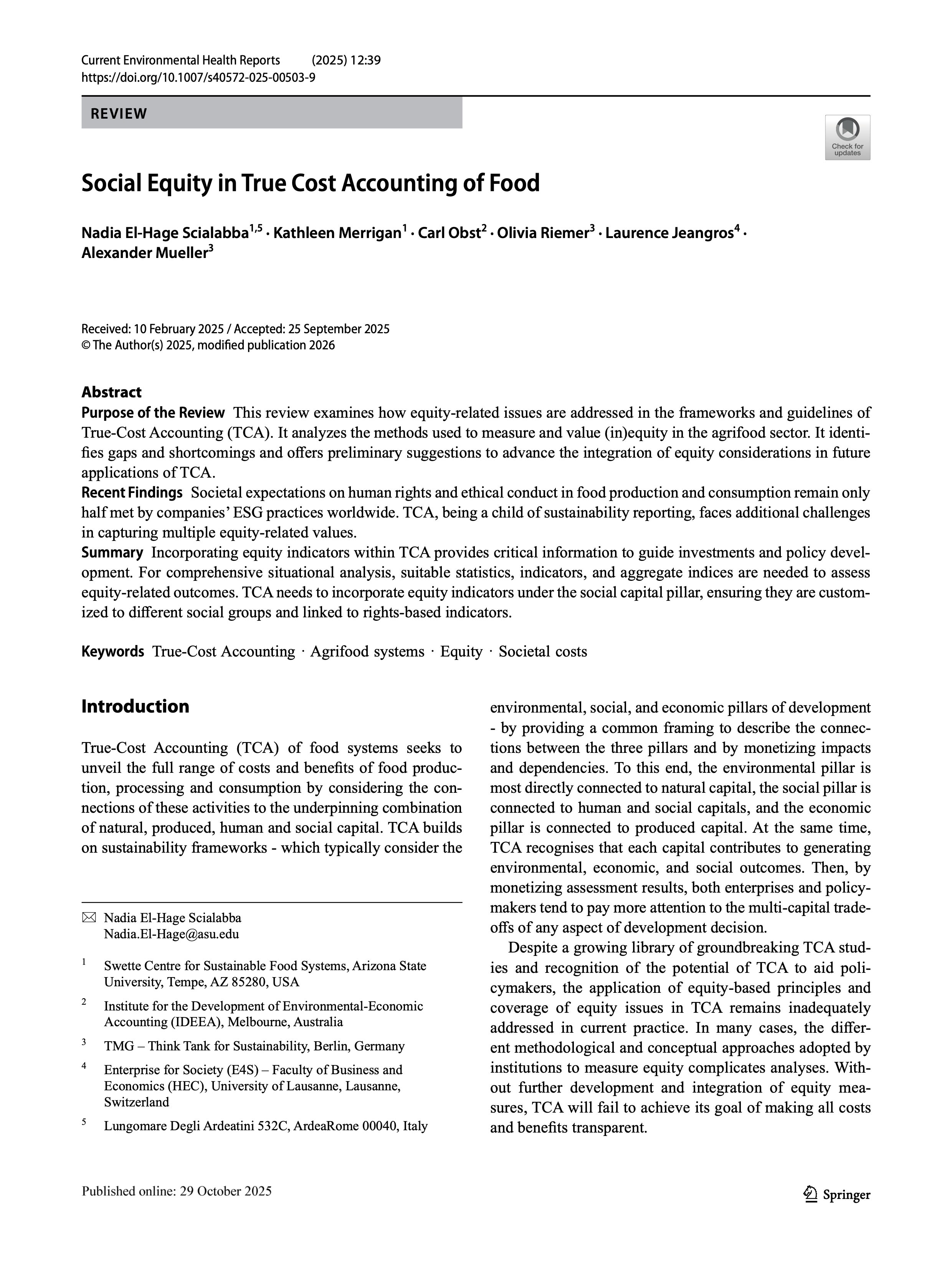
Social Equity in True Cost Accounting of Food
Examines how equity-related issues are addressed in the frameworks and guidelines of True-Cost Accounting (TCA).
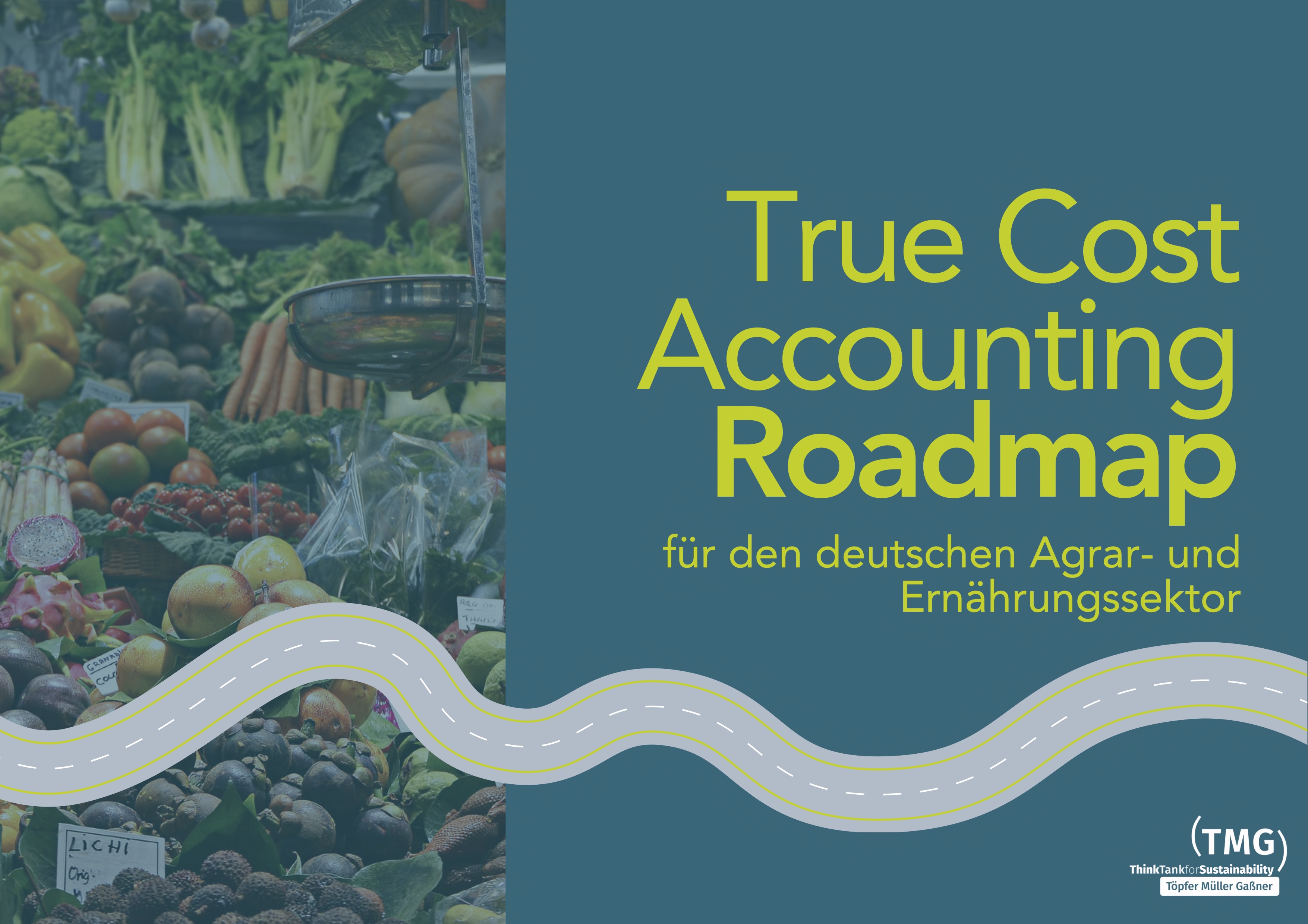
True Cost Accounting Roadmap für den deutschen Agrar- und Ernährungssektor
Der Kurzbericht des TCA-Roadmap-Projekts zeigt konkrete Schritte für die Entwicklung eines technischen Ansatzes und institutionellen Rahmens zur Umsetzung von True Cost Accounting (TCA) im deutschen Agrar- und Ernährungssektor auf.
Abschlussbericht: True Cost Accounting Roadmap für den deutschen Agrar- und Ernährungssektor
Der Abschlussbericht des TCA-Roadmap-Projekts zeigt konkrete Schritte für die Entwicklung eines technischen Ansatzes und institutionellen Rahmens zur Umsetzung von True Cost Accounting (TCA) im deutschen Agrar- und Ernährungssektor auf.
Report
Recommendations and high impact areas for policy interventions
Using True Cost Accounting, this report identifies foods that are major contributors to environmental and health costs and social risks and makes recommendations for policy measures to shift dietary patterns towards greater sustainability and health.
Written by Anna Berlina, Leneisja Jungsberg, Louise Ormstrup Vestergård, Marlene Ohlau, Anthony Fardet, Olivia Riemer
Published on Feb 17, 2026
Report
True Costs and Benefits of 3 EU Dietary Patterns
Presents a True Cost Accounting (TCA) assessment of the environmental and health impacts, social risks, and true costs associated with dietary patterns across three European countries (Germany, Ireland, and France).
Written by Amelie Michalke, Sandra Köhler, Siranush Ghukasyan, Olivia Riemer, Gültaç Çınar, Marlene Ohlau
Published on Feb 16, 2026
Article
Social Equity in True Cost Accounting of Food
Examines how equity-related issues are addressed in the frameworks and guidelines of True-Cost Accounting (TCA).
Written by Nadia El-Hage Scialabba, Kathleen Merrigan, Carl Obst, Olivia Riemer, Laurence Jeangros, Alexander Müller
Published on Feb 09, 2026
Report
Abschlussbericht: True Cost Accounting Roadmap für den deutschen Agrar- und Ernährungssektor
Der Abschlussbericht des TCA-Roadmap-Projekts zeigt konkrete Schritte für die Entwicklung eines technischen Ansatzes und institutionellen Rahmens zur Umsetzung von True Cost Accounting (TCA) im deutschen Agrar- und Ernährungssektor auf.
Written by Carmen Steinmetz, Gültaç Çınar, Olivia Riemer
Published on Jan 29, 2026
Report
True Cost Accounting Roadmap für den deutschen Agrar- und Ernährungssektor
Der Kurzbericht des TCA-Roadmap-Projekts zeigt konkrete Schritte für die Entwicklung eines technischen Ansatzes und institutionellen Rahmens zur Umsetzung von True Cost Accounting (TCA) im deutschen Agrar- und Ernährungssektor auf.
Written by Carmen Steinmetz, Rowan Deer, Gültaç Çınar, Olivia Riemer
Published on Jan 29, 2026
Presentation
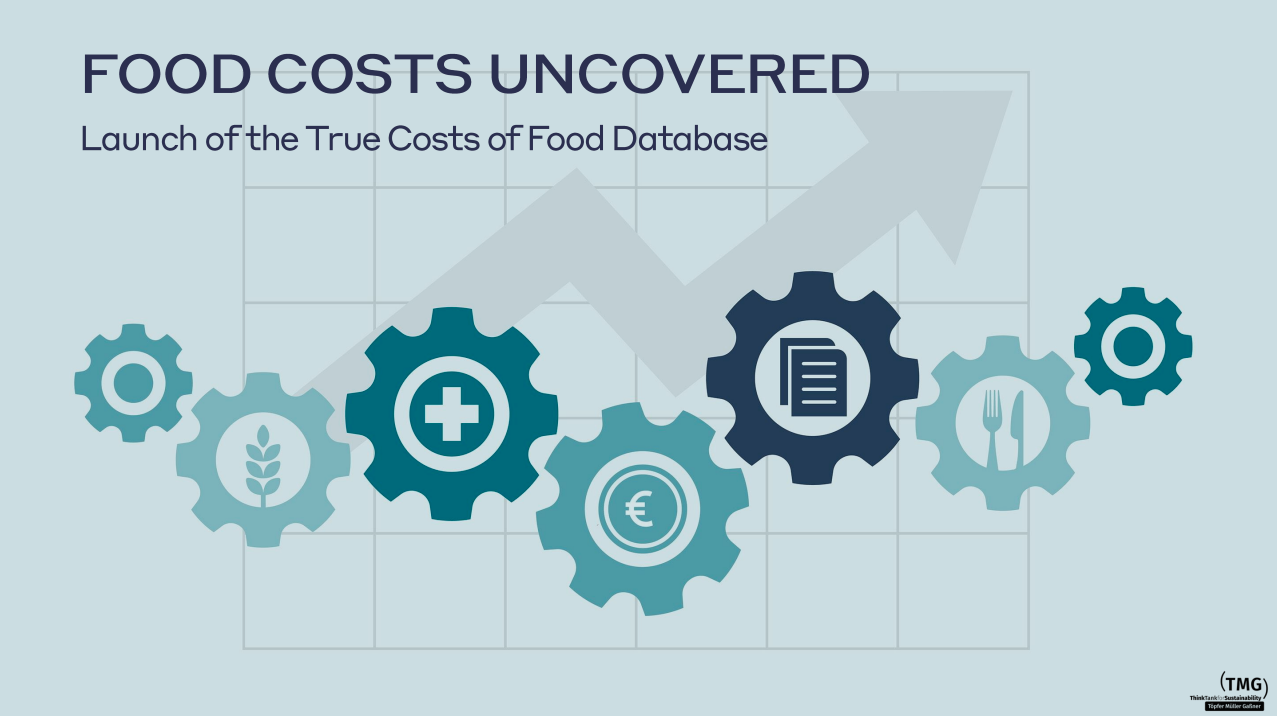
Food Costs Uncovered: Launch of the True Costs of Food Database - Presentation Slides
Slides from the online launch event of the True Costs of Food Database, which took place via Zoom on 8 January, 2026.
Written by Gültaç Çinar
Published on Jan 19, 2026
- True Cost Accounting Jan 08, 2026
The True Costs of Food Database Explained
Learn about the scope and uses of the first open-access food database to utilize a True Cost Accounting approach.
- True Cost Accounting Jan 05, 2026
How to Use the True Costs of Food Database | User Guide
Learn how to use the True Costs of Food Database with this step-by-step tutorial. Discover how to navigate the database, find food products, explore environmental and health impacts and calculate true costs.