Working with Informality for Food Systems Transformation
The informal economy is the foundation of livelihoods for many around the world—and therefore a vital part of building sustainable, resilient, and just food systems, especially in the current era of polycrisis. We work to valorize the informal economy as a co-creator and indispensable partner in the progressive realization of the right to food.
Why work with informality?
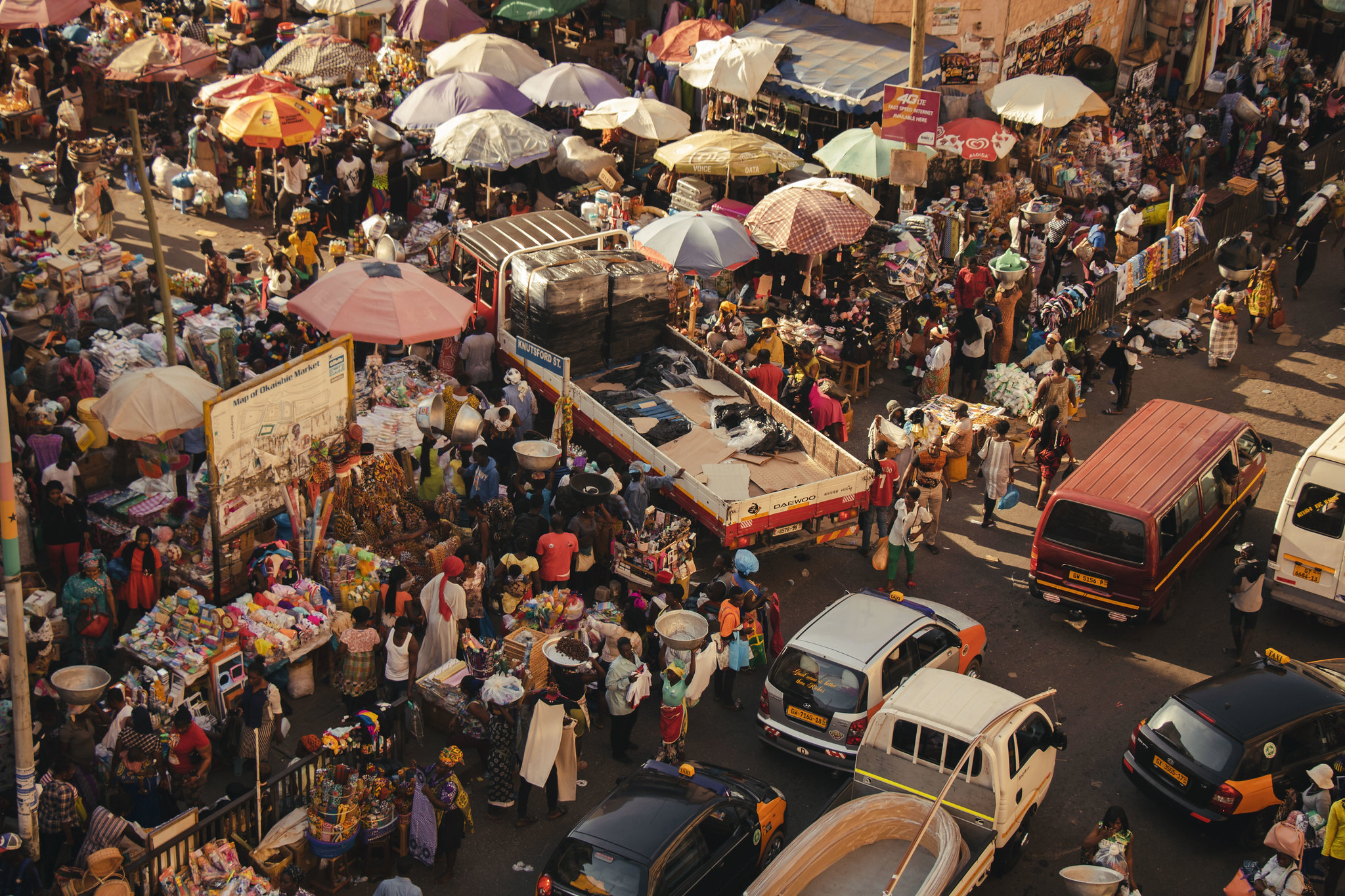
The informal economy is a critical foundation for urban and rural resilience and livelihoods, providing income and food access for millions in low- and middle-income countries. Globally, 60 per cent of workers—more than 2 billion people—are employed informally, particularly in agriculture and food trading. Across the African continent, 84 per cent of employment is informal—a share set to grow with rapid urbanization and population growth in sub-Saharan Africa.
Informality is not a temporary phase. It is here to stay. Yet its vital contributions to food security and community resilience often remain unrecognized and undervalued.
In the informal settlements of Nairobi, Kenya, for example, households purchase over 95 per cent of their food from informal vendors—without whom food access would be extremely limited. Beyond food supply, community-led grassroots initiatives—such as vendors’ associations and community kitchens—provide vital safety nets, offering forms of social protection where formal systems are absent or inadequate. These solutions emerge from the lived knowledge of informal actors, who develop practical, locally rooted responses shaped by community needs. In times of crisis, people living in contexts of informality do not wait for aid. They innovate, self-organize, and lead.
In the current era of global polycrisis—where climate change, political instability, economic shocks, and global health emergencies collide—the role of the informal economy as a cornerstone of resilience and food security becomes ever more essential. Yet many governments continue to reinforce the formalization paradigm, pushing informal workers further into the margins of society. This must change. Rather than treating formalization as a prerequisite for support, policymakers must develop regulations, investments, and protections that align with the (often informal) realities of how people live and work.
The stakes are high. Today, less than a fifth of the Sustainable Development Goals (SDGs) are on track—and in regions most vulnerable to the impacts of the global polycrisis, extreme poverty and hunger are worsening. To break through this stagnation, especially on SDG 2 (Zero Hunger), we must work with the informal economy as a powerful driver of sustainable development and food systems transformation.
Building sustainable and equitable food systems demands that we value the informal economy as a vital partner—an indispensable co-creator **in the progressive realization of the right to food. **
Stay in touch—join our mailing list.
Our approach
TMG's work is rooted in the belief that working with informality is a powerful catalyst for resilient, sustainable, and equitable food systems transformation and achieving the right to food for all. We seek to work with informal actors to support and strengthen what is already working to address urgent challenges in food access and urban livelihoods.
Central to our methodology is participatory action research, which collaborates with communities as co-researchers and decision-makers. In Mukuru, an informal settlement in Nairobi, Kenya, we collaborated with local organisations and community members to design a school meal programme model that balanced affordability, nutrition, and ownership. We also supported the formation of food vendor associations in Mukuru, helping build their operational capacity and facilitating dialogues with local government. In Mathare, another settlement in Nairobi, we worked with women-run eateries to document their critical contributions as food providers and social safety nets. And in Cape Town, South Africa, we co-developed innovative models with community kitchens to ensure their long-term sustainability.
**Across these efforts, we take a rights-based and bottom-up approach, centring community ownership, fostering self-organisation, and bridging gaps between informal actors and policymakers. **
Our position paper
*Our position paper argues that amid growing hunger, rapid urbanization, and shrinking aid budgets, working with informality is indispensable to achieving the Sustainable Development Goals (SDGs)—especially SDG 2, Zero Hunger. **Drawing on our research from Nairobi and Cape Town, we show how informal actors—from food vendors to community kitchens—are already innovating to fill critical gaps in food access and social protection. Rather than treating informality as a problem to formalize away, policy frameworks must recognise, support, and work *with informal systems as vital engines of social resilience and inclusion. Supporting self-organisation, flexible regulation, and targeted investment in the informal economy can unlock scalable, community-led solutions for more equitable and sustainable development.
About TMG Think Tank for Sustainability
TMG is dedicated to driving just and sustainable transitions through action research and policy dialogue. Committed to a rights-based approach, our programmes focus on responsible land governance, food systems transformation in rural and urban settings, and adaptation to climate change.
At TMG, science with society is more than a principle; it's how we work to ensure equitable pathways to sustainable development. We explore how local innovations and global policies intersect to drive systemic change, ensuring that international frameworks are both inspired by and responsive to community-led transformations. Our research projects and advocacy are co-developed with civil society, policymakers, scientists and the private sector to ensure international sustainability efforts are informed by emergent innovations and forge real-world solutions.
TMG is headquartered in Berlin, with a team in Nairobi. Our research focuses primarily on the European Union and Africa, including Benin, Kenya, Madagascar, Malawi and South Africa.