Designing Inclusive and Sustainable School Meal Programmes in Challenging Contexts
Lessons from the Mukuru Community-led School Meals Programme
Jun 29, 2026
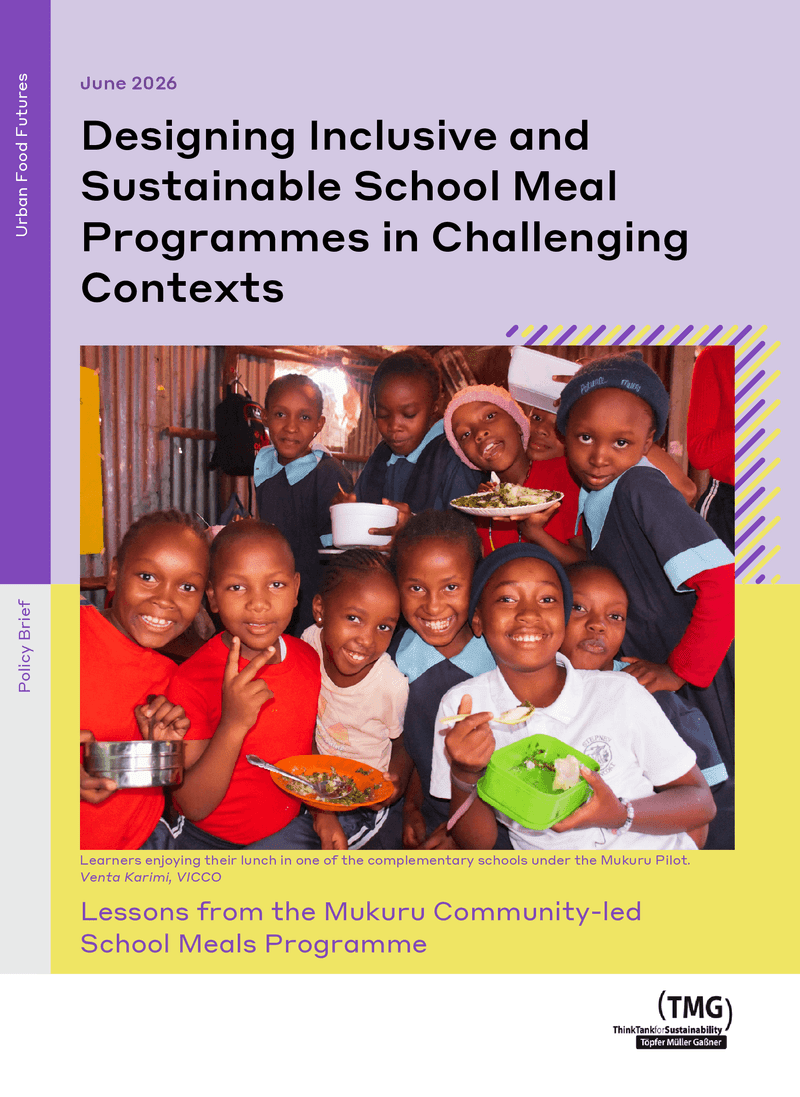
This policy brief presents findings from action research on school meals and highlights key lessons on contextual programme design and community-led governance, and their impact on programme coverage, operational and cost efficiency, and the unlocking of local financing.
In Nairobi’s informal settlements, many children miss out on school meals not because their need is lower, but because the schools they attend fall outside government school meal programmes. Drawing on comprehensive surveys of the state of schools and school meal programmes in Mukuru, TMG Research, together with VICCO and Ruben Centre, co-designed and piloted a community-led school meals programme with parents and school management for six complementary schools. A central finding is the significant role that parent contributions can play, covering up to 85% of the meal costs. The brief shows how this level of support is made possible through thoughtful programme design and governance, including co-design processes, parent oversight, shared procurement and preparation, and targeted support for the most vulnerable learners. The Mukuru experience demonstrates that expanding school meal coverage is not only a question of increased financing, but also of designing systems that build trust, accountability, and sustained community engagement to reach children where they are.