Land Tenure, Governance, and Resilience at COP17
TMG Research on COP17: closing the governance gap in land tenure, women's land rights, and the Future Strategic Framework. Ulaanbaatar, August 2026.
.png)
Introduction
Land degradation now affects up to 40 per cent of the world's land surface and half of humanity. The G7 has recognized land degradation and drought as drivers of global instability. Land governance is no longer only an environmental question; it is a matter of resilience and security.
Almost a decade of UNCCD decisions has built a strong framework on land tenure, gender, and inclusive governance. COP17 in Ulaanbaatar, the first of the three Rio Convention COPs in 2026 and set against the International Year of Rangelands and Pastoralists, is a pivotal moment. But the gap between what has been agreed and what gets delivered on the ground remains wide. TMG's work for COP17 asks why that gap persists, and what conditions would close it.
Why Land Tenure Matters for the UNCCD
Land tenure security matters first because of people: it determines whether smallholders, women, youth, Indigenous Peoples, and pastoralist and mobile communities can secure their access to the land and resources their lives depend on. This is the anchor of the people-centred, rights-based approach that grounds the UNCCD's work on land degradation neutrality and why land governance must work as both a safeguard, protecting legitimate tenure rights and preventing exclusion, and an enabler, creating the incentives for restoration and sustainable land management.
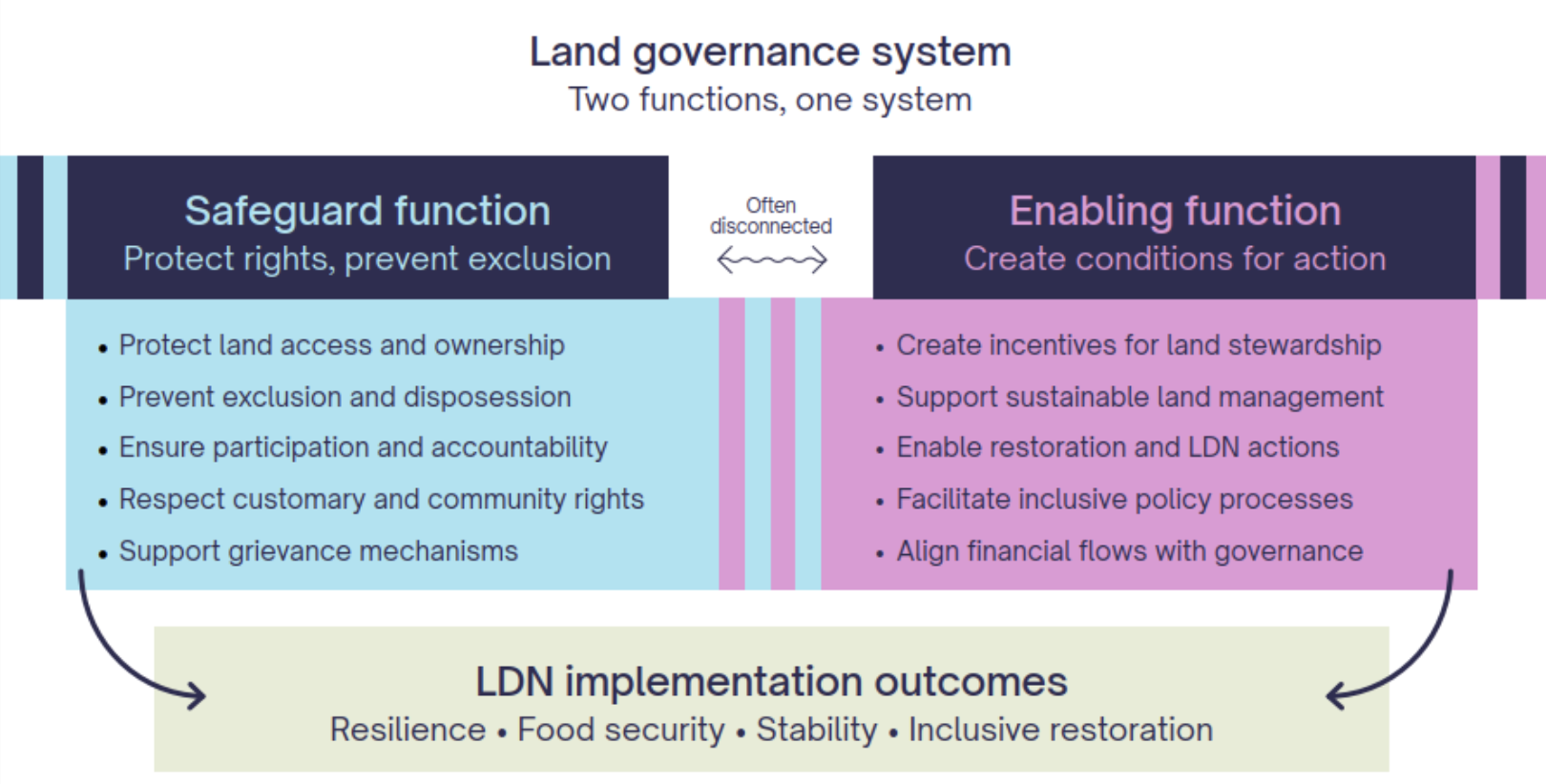
The evidence for the enabling function is strong: research across Sub-Saharan Africa has linked tenure reform to significant productivity gains (Holden & Otsuka, 2014), and titling cut forest clearing by over 75% in the Peruvian Amazon (Blackman et al., PNAS, 2017). Women's land rights alone could lift up to 150 million people out of hunger if realized at scale (FAO, 2011) and with particular weight for pastoralist and mobile communities, who steward an estimated 45% of the world's rangelands and depend on recognition of communal tenure and seasonal mobility to sustain both their landscapes and their livelihoods.
Successive UNCCD decisions, most recently 26/COP.14, 27/COP.15, and 28/COP.16, have progressively embedded this recognition, alongside parallel mechanisms such as the Riyadh Action Agenda and the Intergovernmental Land Tenure Commitment. Yet turning this recognition into practice remains the persistent challenge: as TMG's research across Benin, Kenya, Madagascar, Malawi, and beyond has shown, the constraint is rarely a lack of commitment, but a governance gap in implementation with fragmented institutions, under-resourced coordination, and civil society engagement that stays ad hoc rather than structured.
What is COP17?
COP17 is the seventeenth Conference of the Parties to the UN Convention to Combat Desertification (UNCCD), convening governments, UN agencies, civil society, and Indigenous and pastoralist representatives to negotiate the Convention's decisions on land degradation, drought, and desertification. This year's session in Mongolia, the world's pre-eminent pastoralist nation, with 77% of its territory affected by degradation, will consider a follow-on decision on rangelands and pastoralists, progress on the land tenure commitments made at COP14–16, and progress on gender. These central elements safeguard communities and enable effective climate action.
Thematic Sections
The Missing Infrastructure: Why Land Tenure Decisions Stall Without Structured CSO–NFP Collaboration
The challenges to achieving land degradation neutrality are not only technical. Fragmented mandates, siloed data, under-resourced coordination, and ad hoc rather than structured engagement with civil society form the governance gap between commitment and delivery.
UNCCD National Focal Points (NFPs) sit at the centre of this gap. As the formal link between global commitments and national systems, they are responsible for delivery, yet in many countries they operate with limited authority, constrained budgets, and no dedicated coordination infrastructure. NFPs cannot deliver alone. They depend on a functioning collaborative framework that connects ministries, civil society organisations, research institutions, customary authorities, and development partners.
TMG's research in Benin, Madagascar and Kenya shows what strengthening that framework requires in practice: clearer mandates for NFPs to convene across ministries, dedicated resourcing for coordination, not only for projects, and early engagement of civil society rather than consultation at the end.
The logic is a chain, and every link matters: restoration investments will not deliver at scale without tenure security; tenure commitments will not translate into outcomes without coordination; and coordination will not function without mandates, resources, and structured support.
Read our brief:
Women's land rights at COP17: calling for the robust implementation of the Gender Action Plan
Secure land tenure is a precondition for effective, equitable restoration — and women's tenure rights remain the clearest test of whether that principle is honoured in practice. The 2026 FAO Status of Land Tenure and Governance report found that tenure insecurity has risen 21% since 2020; women continue to face the biggest challenges in tenure rights..
COP17 is a moment to consolidate strong gender language within UNCCD, not just defend what’s been achieved so far. TMG, with the Women's Land Rights Initiative (WLRI) and coalition partners, is pressing for a COP17 gender decision that secures permanent, core-budget gender capacity at the UNCCD Secretariat, and for the follow-on rangelands decision to name women pastoralists explicitly. Strong language is needed that requests governments to ensure women's land rights are fully enforced on the national level.
TMG and its partners are also calling for improved implementation of the current Gender Action Plan by establishing follow-up mechanisms (required by GAP Activity 4.2) and request the Secretariat to report on progress.
Looking beyond the timeframe of the current GAP, a more robust rights-based Gender Action Plan needs to be developed for the post-2030 period. The new GAP needs to be integrated with the development of the Future Strategic Framework, include targets, sex-disaggregated land-specific SDG indicators, and costed actions, and name responsible actors for its implementation.
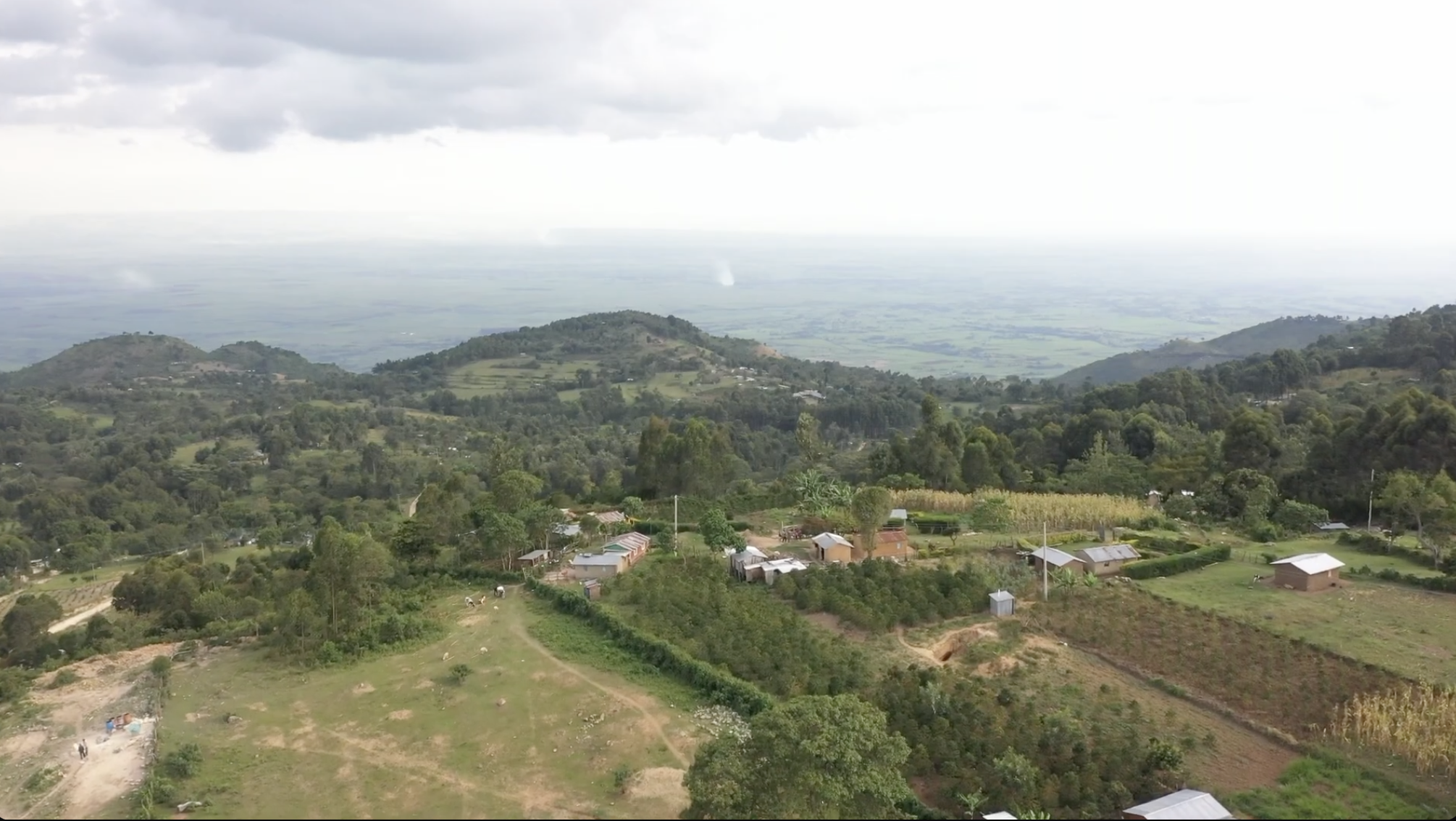
See our videos:

Read our blog:
Scaling Up Solutions - or Scaling Up Gaps? Just Transition as the Missing Foundation of Land Degradation Neutrality
Land restoration cannot succeed where the enabling conditions for a just transition are absent. This is the central finding of TMG's Just Transition research across Benin, Kenya, Madagascar, Malawi, Niger, and Uganda, which examines tenure security, participation, and accountability not as separate technical fixes, but as one connected governance challenge.
The evidence is consistent: LDN implementation is constrained less by technical limitations than by governance failures. Across the six countries studied, more than 70% of respondents feared losing access to land and natural resources; a figure that rises to 95% around Benin's Three Rivers Forest. These fears reflect weak tenure protection, limited participation in decision-making, and the absence of accessible grievance mechanisms.
The stakes are rising. As countries roll out the LDN Target Setting Programme 2.0 and design LDN Transformative Projects and Programmes, these governance gaps risk being scaled up rather than closed — unless just transition principles are integrated from the start.
TMG pairs this diagnosis with a practical framework for action. It analyzes land governance across four dimensions — institutional, policy, financial, and knowledge — through the lens of procedural, distributive, and restorative justice. This helps NFPs, ministries, and civil society pinpoint where enabling conditions are weak, and where reform is possible.
Read our briefs:
The Future Strategic Framework: the opportunity to structurally embed land tenure in UNCCD
The Intergovernmental Working Group on the Future Strategic Framework (IWG-FSF) presents its final report at COP17, offering a significant opportunity for structurally embedding land tenure in UNCCD. The report recognizes secure land tenure as an enabling condition for achieving Convention targets, and includes vulnerable populations, Indigenous Peoples, local communities, women and youth explicitly. This important language must be retained in the FSF!
TMG and the WLRI therefore advocate for the inclusion of land tenure expertise in the extended 2026-2028 mandate of the IWG. This will help ensure that the critical land tenure and gender-related language will be included in the FSF and that the IWG draws on best practices for land tenure indicators from other Rio Conventions—particularly targets 22 and 23 of the KMGBF—when developing the FSF monitoring framework. Land-related SDG indicators (1.4.2, 5.a.1, and 5.a.2) should be included in the post-2030 FSF to promote greater harmonization and efficiency in efforts to strengthen tenure security across all three Rio Conventions while reducing reporting burdens.
If tenure is not embedded now — with dedicated indicators, a clear theory of change, and budget commitments — it risks remaining an underfunded add-on for another decade.
Coordinating COP17 Advocacy on Land Tenure
In preparation for COP17, TMG, Landesa, and the International Land Coalition (ILC) developed a suite of advocacy materials to advance secure and gender-equitable land tenure commitments in COP17 decisions and UNCCD implementation.
- The talking points set out the core positions across land tenure, women's land rights, and rangelands. This is useful for civil society organisations, advocates, and anyone engaging in COP17 discussions who wants to align with the coalition's messaging.
- Based on the draft decision text by the UNCCD Secretariat, we developed joint text recommendations, available in English, French, and Spanish, providing a rationale and specific text proposals for negotiators and government delegates engaged in the formal process.
- A joint call to action summarises the coalition's asks in three pages — an accessible entry point for anyone wanting a quick overview of what the coalition is calling for at COP17.